by Elaine Fitzgerald, M.D.
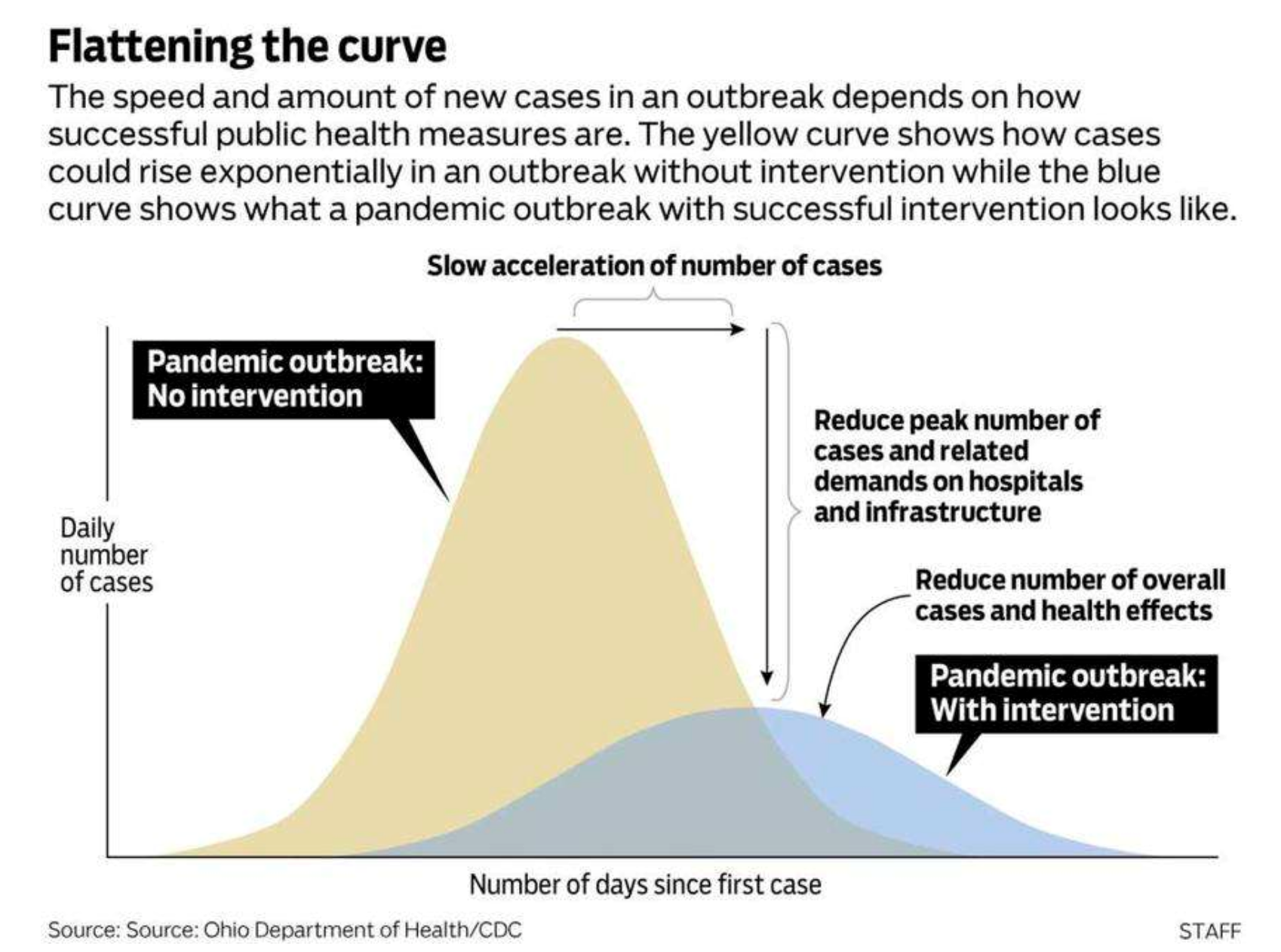
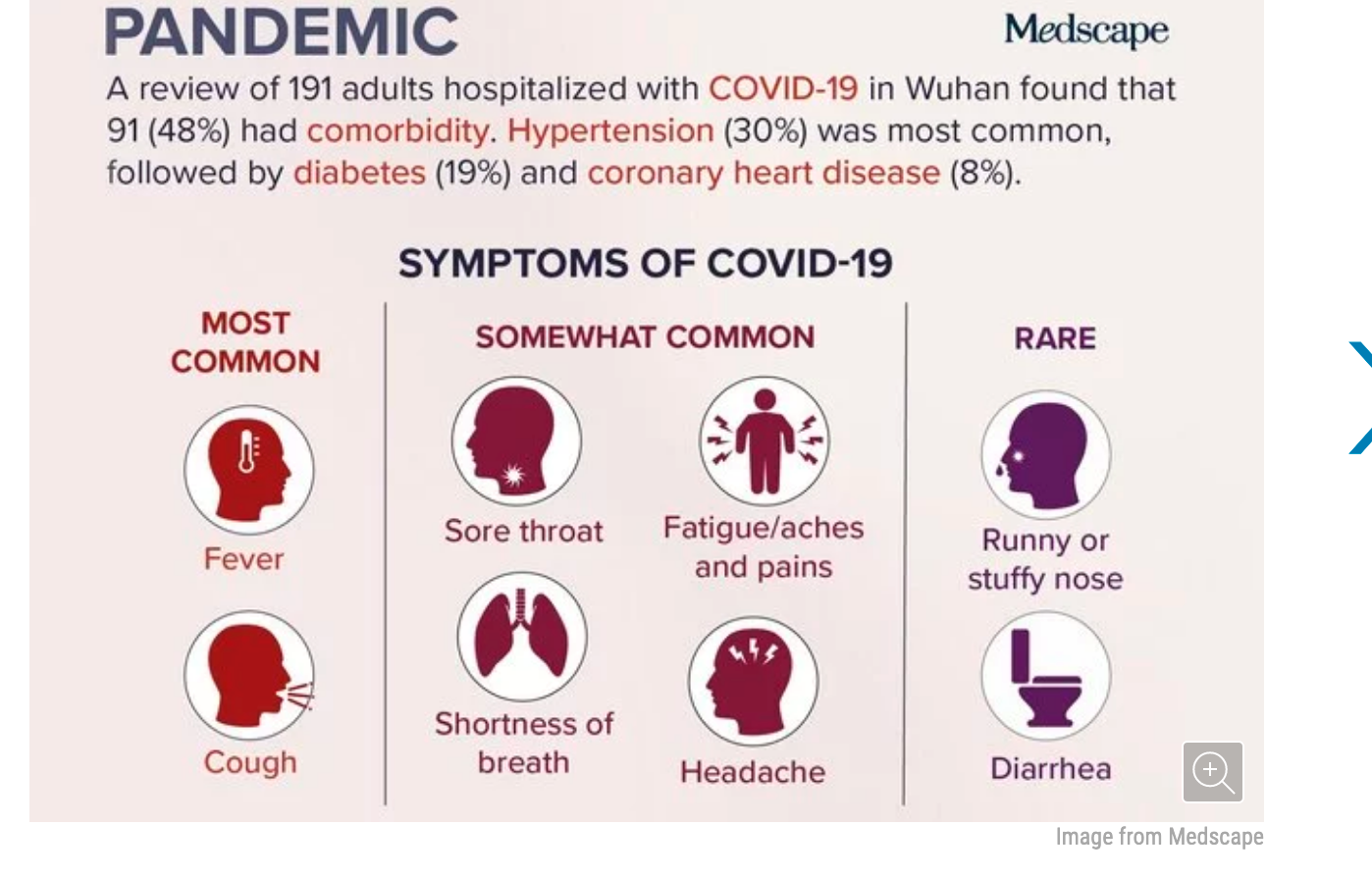
Coronavirus (COVID-19) is a virus that causes mild flu-like symptoms in 80% of cases (fever, cough; headache; sometimes sore throat, fatigue, aches; rarely diarrhea or runny nose; and shortness of breath when severe); but it can be quite severe in those of older age, and those with chronic health conditions. Of those who are hospitalized 45% are 65 and over, and 55% are 20–64 years of age. In contrast to influenza, COVID-19 is more contagious, doubles quickly, and causes death in 1.4% nationally, (vs 0.1% for the flu). It is spread by droplets from coughs, exhalation, and sneezes, which are spread when a person with COVID-19 coughs or exhales. These droplets land on objects and surfaces around the person. Other people then catch COVID-19 by touching these objects or surfaces, then touching their eyes, nose or mouth. People can also catch COVID-19 if they breathe in droplets from a person with COVID-19 who coughs out or exhales droplets. This is why it is important to stay more than 6 feet away from a person who is sick. States are avidly trying to contain the virus using social distancing in order to avoid development of an overwhelming number of cases by the time the disease peaks (as was the case in Italy). A large number would overwhelm the health system and make it lest likely that those needing medical help could receive it. This is why it is so important to avoid crowds, to stay home if you are ill, and to follow the CDC and Department of Health’s recommendations. You do not have to have symptoms to carry and spread the disease. Information on COVID-19 is also constantly evolving.
Here is what you can do to prepare:
- Wash , Wash, Wash your hands!. Use soap and water for 20 seconds.
- Use hand sanitizer (containing at least 60% alcohol) when soap and water are not available.
- Avoid crowds and poorly ventilated areas.
- Try to avoid touching high-touch surfaces ( elevator buttons, handrails, gas pumps, doorknobs, etc.). Use a tissue or cloth over them instead. Otherwise, wash your hands after touching them.
- Disease can be severe if you are 60 years of age of older, and /or have health problems such as heart disease like coronary disease), high blood pressure, lung disease such as asthma, sickle cell disease, severe obesity, chronic aspirin intake if <19 yrs of age, HIV , metabolic disease, urologic disease, kidney or liver disease)
- The elderly and those with the above conditions are strongly advised to avoid traveling.
- The elderly are also advised to avoid people who are sick.
- The elderly and those with chronic disease should have at least a 30-day supply of food, medical prescriptions and needed medical supplies to treat nasal congestion, cough, fever, etc.; should stay home as much as possible; should limit close contact with people when out; wash their hands often, and keep a good distance (6 feet) between themselves and other people.
- Have a plan for contacting family members if you should need anything.
- Have a decent supply of food on hand in case of quarantine.
- Everyone should avoid those who are ill.
- 20% of all hospitalized cases are 20-44 years of age.
- Keep 6 feet between you and others, especially those with a cough.
- Avoid shaking hands, hugging, holding hands.
- Avoid those that are ill. Keep 6 feet away from those with a cough.
- Avoid touching your eyes nose, mouth.
- It is very important that you stay at home if you are feeling ill.
- Cover your cough or sneeze, washing your hands directly afterward.
- Clean and disinfect your work and home surfaces (doorknobs, light switches, tables, toilets, faucets, cell phone, etc. ) Coronavirus can survive on surfaces up to 5 days.
- Avoid sharing items.
- Those with mild symptoms are urged to stay home, contact their health provider by phone for further instructions, and to mask if they are told that they need face-to-face medical attention for their symptoms. These precautions can save the lives of many.
- If you have symptoms of more than 3 to 5 days of persistent fever, worsening cough, and fatigue, seek emergent care.
- Anyone developing severe shortness of breath, chest pain, change in skin color or change in consciousness, call 911.
- Do not visit older relatives or people in nursing homes at this time because it puts them at too great a risk.
- Have a plan of action in the event that your child’s school/daycare is closed.